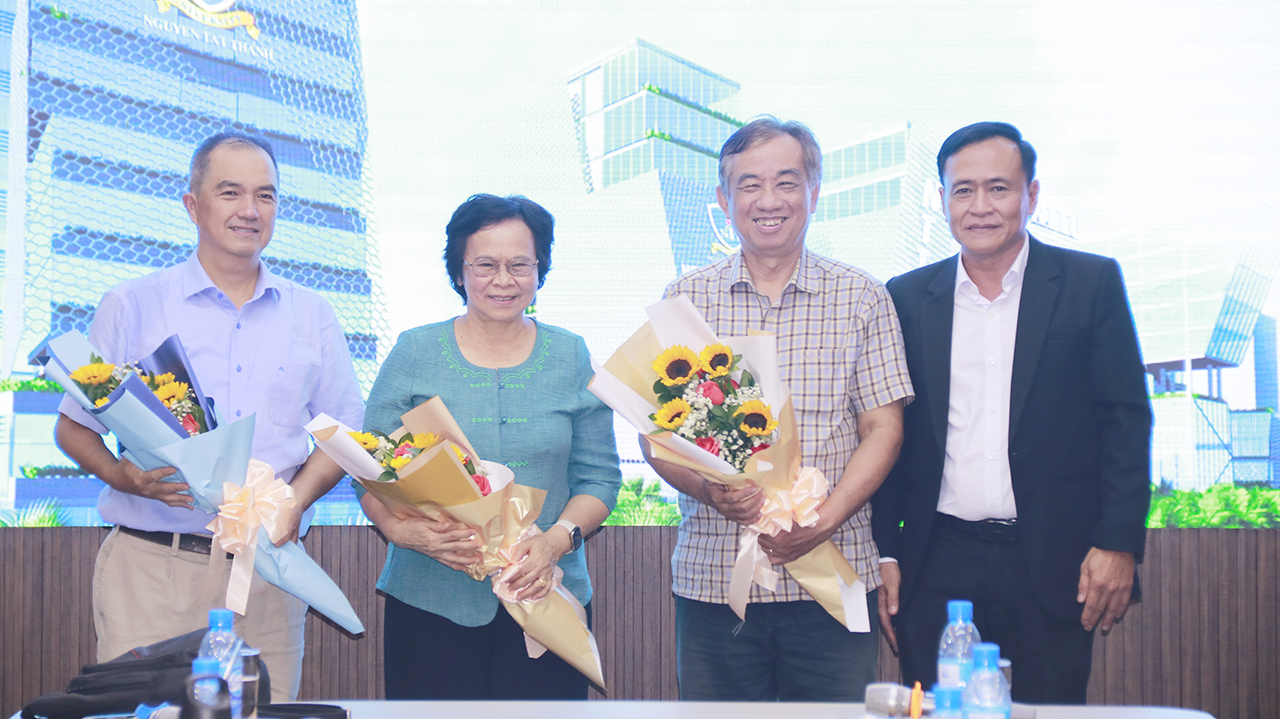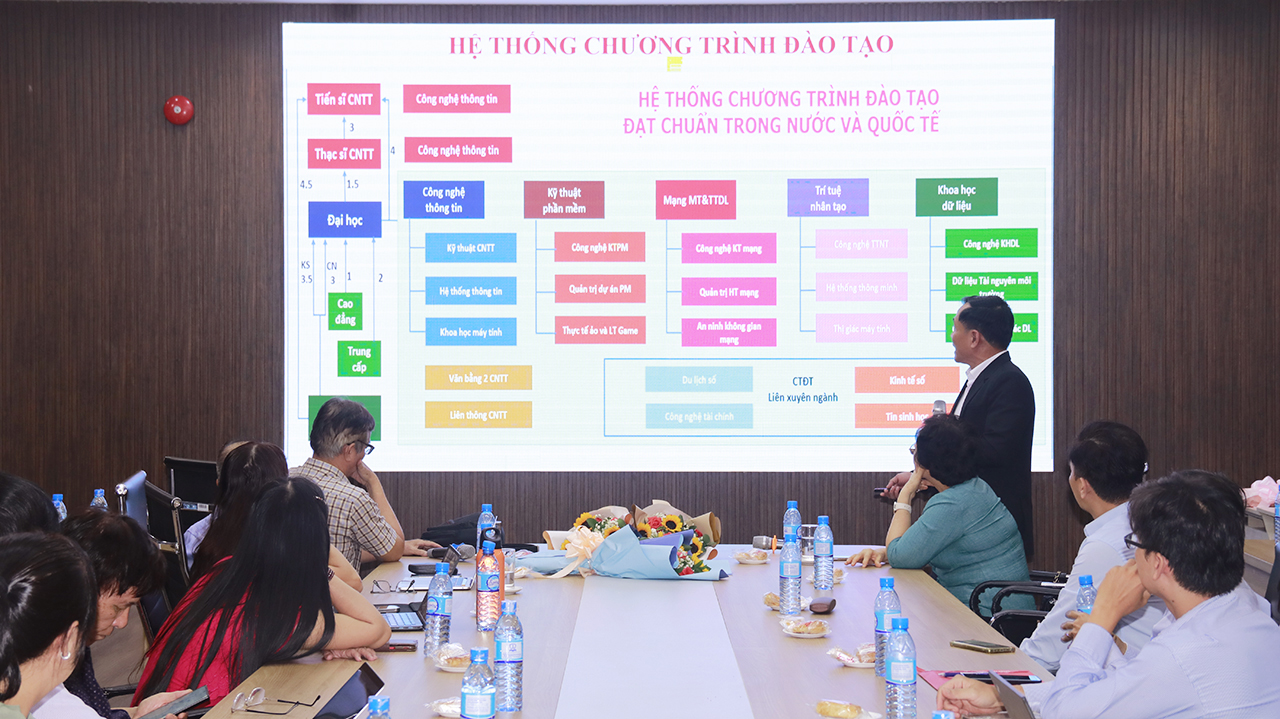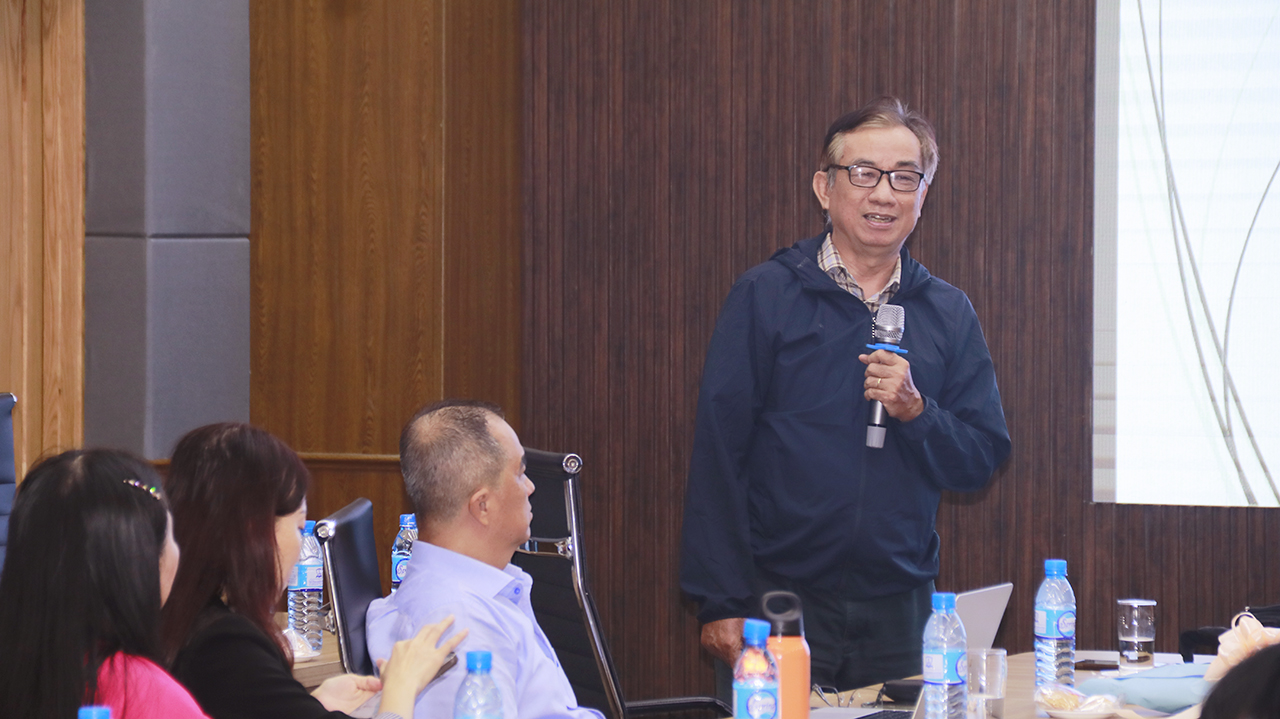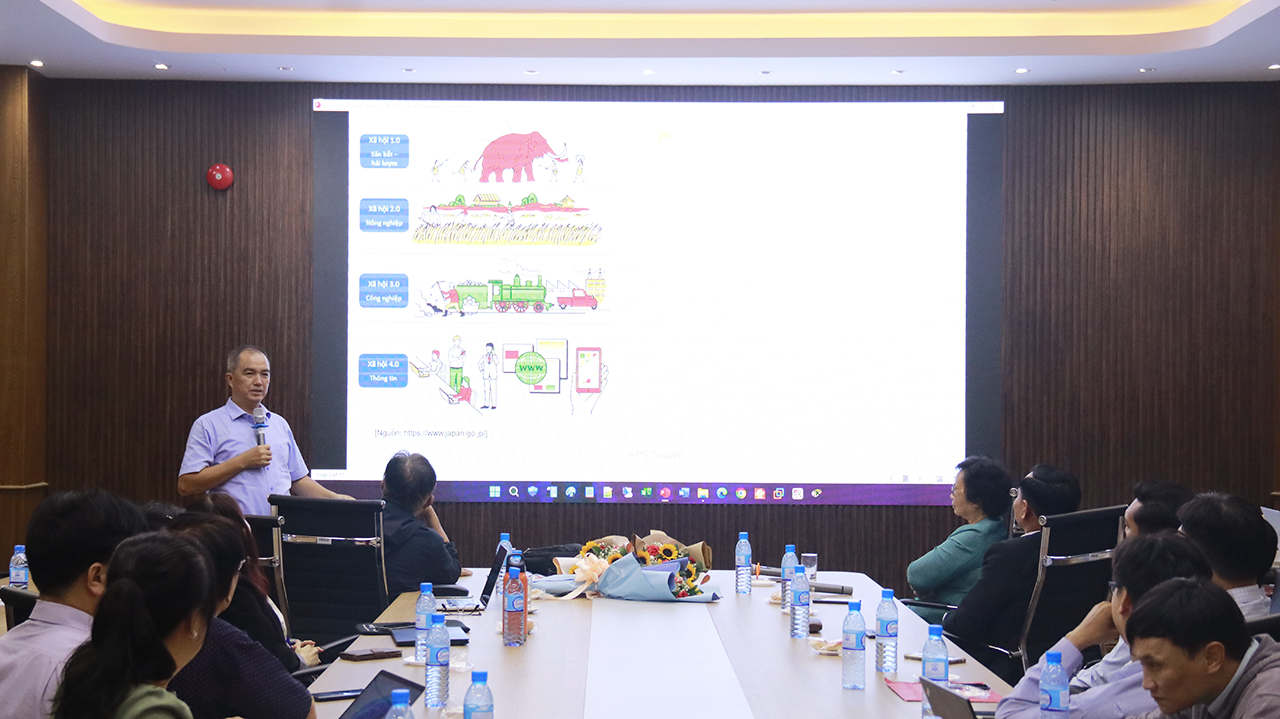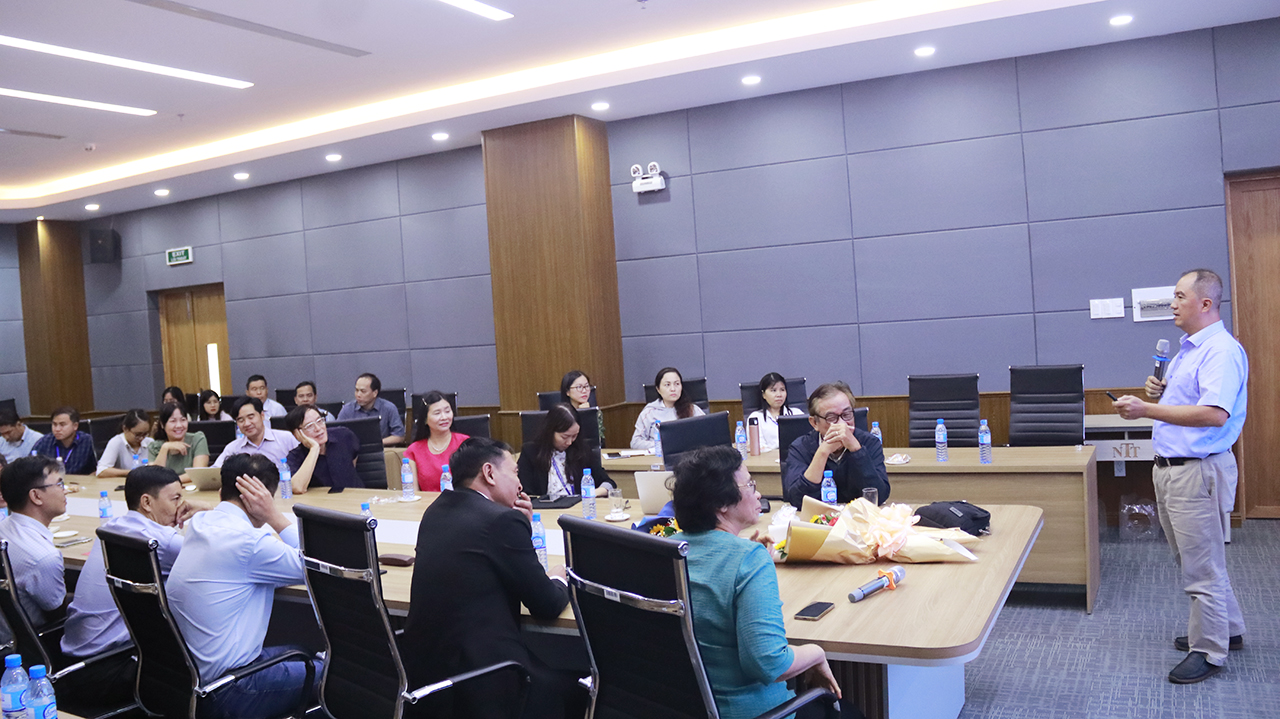
On September 7, 2024, the Faculty of Information Technology of Nguyen Tat Thanh University organized a Scientific Conference on Doctoral and Master’s Training in Information Technology at Hall L906, Nguyen Tat Thanh University, An Phu Dong Campus, District 12.
Date posted: September 7, 2024
The Faculty of Information Technology (IT) was established on May 26, 2011, according to Decision 137/QDNTT-TC of the Rector of Nguyen Tat Thanh University.
Since its establishment, after 12 years of continuous development, the Faculty of Information Technology now has a training scale of over 3500 students and trainees. Over the years, the Faculty has trained students in various fields of information technology at the undergraduate, master’s, and doctoral levels. The Faculty is honored to have been granted permission by the University to enroll and train PhD students in Information Technology starting in 2022, making it the first Faculty at Nguyen Tat Thanh University to offer this highest level of education.
The mission of the Faculty of Information Technology is to train high-quality human resources with entrepreneurial and integration capabilities based on innovation; to conduct applied research, develop technology, and transfer knowledge across multiple disciplines and fields.
The goal of the Faculty’s master’s and doctoral programs is to train high-quality human resources and scientists with the highest academic degrees in the field of information technology.
To fulfill this important responsibility, the Faculty of Information Technology – NTTU respectfully invites reputable, leading scientists from top universities in Vietnam and internationally to participate in the process of curriculum development, teaching courses, supervising and evaluating research topics, theses, and dissertations.
Attending the scientific seminar were leading experts in the field of Information Technology, including the Faculty Board, Dr. Nguyen Kim Quoc, Head of the Faculty of Information Technology, along with the Vice-Heads of Faculty, lecturers, PhD candidates, and PhD candidates of the Faculty of Information Technology, NTTU.
The experts presented and guided the learning and research methods for PhD and Master’s degrees in Information Technology:
– Dr. Nguyen Kim Quoc introduced the Faculty of Information Technology with “Connecting Master’s and PhD Training”
– Prof. Dr. Phan Thi Tuoi, Senior Advisor of the Faculty of Information Technology – NTTU, with the topic “PhD Students: A Journey of Learning and Research”
– Prof. Dr. Do Phuc, University of Information Technology, Vietnam National University Ho Chi Minh City, with the topic “Enhancing Scientific Research and Writing with AI’s Support”
– Assoc. Prof. Dr. Thoai Nam, Director of the Cloud Computing Center, University of Technology, Vietnam National University Ho Chi Minh City. HCM with the theme “Orientation for Training Master’s and Doctoral Human Resources”
Scientific research methodology is the fundamental basis of the learning and research process at the doctoral and master’s levels. The main goal of this methodology is to equip learners with the necessary skills to approach, analyze, and solve scientific problems systematically and objectively. This not only helps to improve professional knowledge but also promotes critical thinking, creativity, and independence in research.
The doctoral and master’s learning process aims to develop in-depth research capabilities in the chosen field. For the master’s level, the main goal is to help learners master basic theories and research methods so they can apply them to their work or continue research at a higher level. Meanwhile, the doctoral program aims to create researchers capable of contributing new knowledge to science through conducting original research with high scientific value.
The importance of scientific research methodology lies in its provision of a standardized system that ensures the transparency, accuracy, and reliability of research results. Mastering scientific research methodology enables students to develop research projects with practical value, contributing to the development of their field of study and society. Furthermore, applying the correct research methods helps students avoid common mistakes such as personal bias, biased analysis, or failure to adhere to ethical principles in research.
The process of studying at the doctoral and master’s levels is also crucial for personal and professional development. Students not only accumulate in-depth knowledge but also develop soft skills such as time management, teamwork, and scientific communication. Simultaneously, it opens opportunities to participate in international professional networks, enhancing collaboration and academic exchange, contributing to raising the student’s standing in the global scientific community. The Scientific Workshop is an important opportunity for experts and lecturers in the Faculty to share opinions, suggestions, and academic exchanges. Experts offer insightful comments, helping to clarify and improve the quality of research, from problem identification and approach to result analysis.
Faculty lecturers actively participate in discussions, contributing opinions based on their experience and expertise, creating a vibrant and useful exchange environment. The workshop not only helps to refine ongoing research but also broadens perspectives, promotes collaboration, and enhances the quality of training and research within the Faculty.
vxchi_Khoa CNTT
IMAGES FROM THE SCIENTIFIC SEMINAR (Provided by Minhsang)