


In today’s technology world, if programmers are the bricklayers of software, then Systems Engineers are the chief architects – the designers and operators of the entire massive “machine” to ensure all components operate smoothly, stably, and efficiently at Nguyen Tat Thanh University.
They don’t just look at a single line of code or a single server, but encompass the entire picture of the technology infrastructure.
What do Systems Engineers actually learn?
Many students mistakenly believe that Systems Engineers only “repair computers” or “install Windows.” This is a completely wrong misconception.
This field of study deeply integrates hardware, software, and system administration. Upon completing the course, you will be equipped with comprehensive knowledge of:
– System architecture design: Building infrastructure capable of handling millions of users simultaneously (such as Facebook, Shopee, online banking) without crashing.
– Cloud Computing: Mastering major platforms like AWS, Microsoft Azure, and Google Cloud – the backbone of the modern internet.
– Virtualization and Containers: Utilizing advanced technologies such as VMware, Docker, and Kubernetes for fast and flexible application deployment and management.
– Automation and DevOps/SRE: Writing scripts and building CI/CD pipelines for self-operating, self-monitoring, and self-correcting systems.
– System Security: Designing multi-layered protection systems to combat hacker threats and cyberattacks.
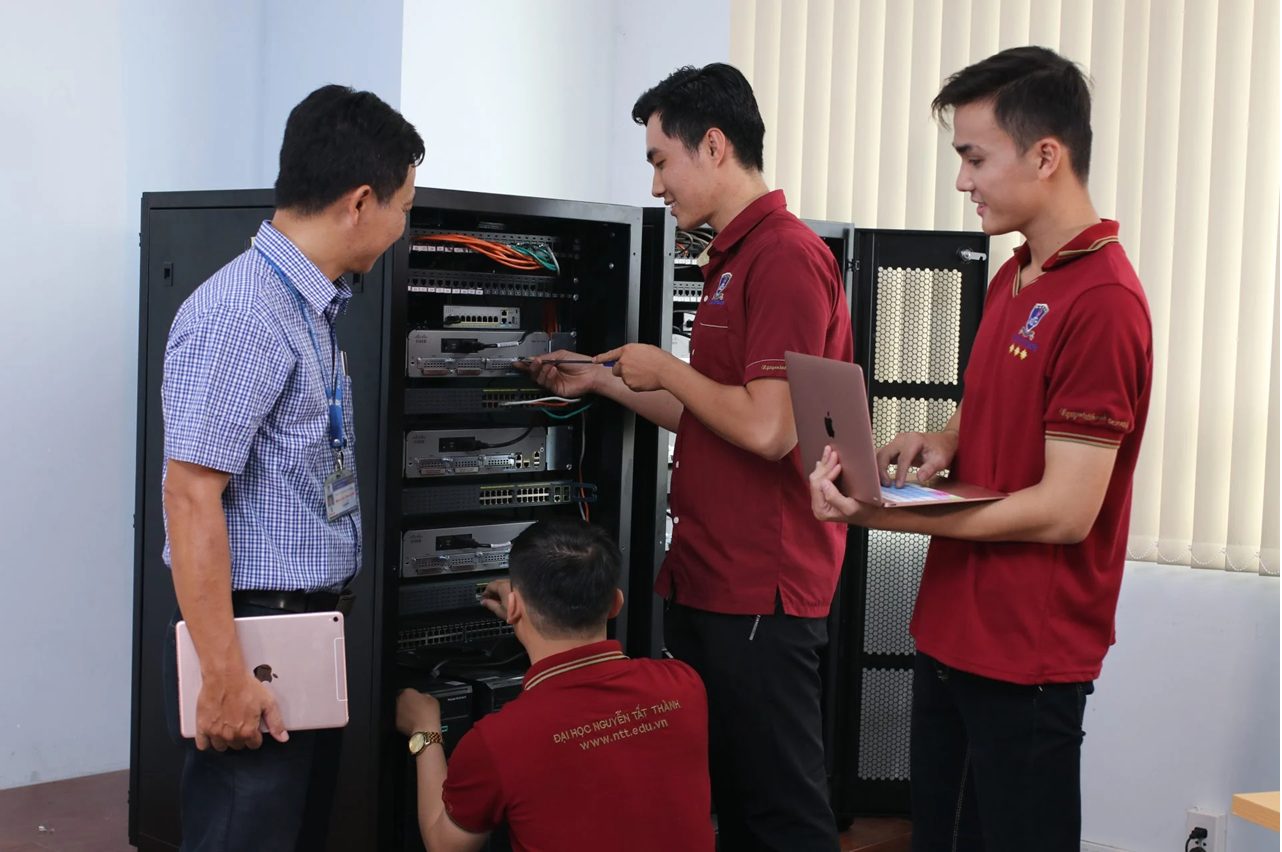
The clear difference: Systems Engineers versus other IT professionals
Example of an online banking system:
– Software Engineer: Focuses on writing code to create the money transfer interface, QR code scanning functionality, and business logic. They care about user experience and application functionality.
– Data Scientist: Analyzes transaction data to understand customer behavior, detect fraud, and provide business insights.
– Systems Engineer: Builds and operates the “highway” and “traffic light” system. They ensure that even if a million people transact on New Year’s Eve, the system will run smoothly, stably, securely, and without data theft.
In short: If a Software Engineer creates the “car,” a Systems Engineer builds and maintains the entire “road system” so that the car can run fast, safely, and reliably.
The “Golden” Qualities for Success in the Industry
The Systems Engineering field isn’t for everyone. You’ll easily shine if you possess the following characteristics:
– System Thinking: Enjoys seeing the big picture, interested in how components connect and influence each other.
– Meticulousness and Process-Orientedness: Always prepares contingency plans, prefers things to be well-organized and stable.
– Excellent Problem-Solving Skills: Feels excited when “hunting” for bugs, finding root causes, and fixing system problems.
– Not Afraid to Experiment with Infrastructure: Enjoys learning about hardware, servers, storage, and cloud technology, rather than just writing code.
Regarding Mathematics and Necessary Skills
You don’t need to be a math genius to study this field. However, you need strong logical and discrete mathematics skills to design logical data flows and avoid conflicts.
Furthermore, English is a mandatory skill because most in-depth documents and international certifications (AWS Certified Solutions Architect, Azure Administrator, Google Cloud Professional, Kubernetes, etc.) are in English.
Career Opportunities: Broad and Irreplaceable
Despite concerns about AI, Systems Specialists remain one of the “irreplaceable” positions due to the need for critical thinking, practical experience, and the ability to manage complex systems.
After graduation, you can work in the following highly sought-after positions:
– System Administrator: Managing and maintaining the enterprise’s server infrastructure
– Cloud Engineer: Designing and operating cloud infrastructure
– DevOps Engineer: Bridging the gap between software development and system operation (salaries are often among the highest in the IT industry)
– Site Reliability Engineer (SRE): Ensuring the highest level of system reliability and performance
– Security Engineer: Specializing in system infrastructure security

In conclusion: Mastering the foundation – Mastering the future
Systems engineering may not be the most glamorous field, but it is the foundation of all foundations in the digital world.
If you want to be the key to the operation of large corporations, enjoy the feeling of mastering massive systems and ensuring everything runs smoothly behind the scenes, then Systems Engineering is the choice for you.
ThS. Nguyễn Thị Phong Dung